2024年1月24日星期三

Just How Tolerances Influence Injection Molded Plastics?


What Is Tolerance?

The tolerance stated in the plastic injection mold is an engineering requirement. In basic terms, they are allowable variants to the initial dimensions of the parts or the base dimension. As it is impossible to generate a product that purely abides by the base measurements, some leeway obtains factored into the design of items.

This margin ensures that all measurements for molded products fit the setting up demands. For example, you may wish to produce products with a size of 2.8 mm. Nevertheless, attempting to produce them might end up with some of them gauging 2.6 mm.

What tolerances do is to establish minimum as well as optimum values for the production process in a way that ensures the product fits. In this case, the reduced limit can be evaluated 0mm while the ceiling is readied to 0.3 mm. By doing this, you are assured products whose diameters range between 2.8 mm and also 3.1 mm.

The important of tolerances

Generating plastic parts for your products calls for that their measurements fit perfectly. It’s very easy to offer dimensions for the type of components you want; obtaining them to have similar measurements to your requirements is a virtually impossible venture to achieve.

The type of making procedure you go for also has a terrific bearing on the high quality of completion product. Injection molding is among the most effective processes you can experience with standards like hubbub 16901 to name a few, but it’s still unable to produce parts with the right fit.

The only escape of such a scenario where it’s impossible to get an exact suit is to leave area for some distinctions in dimension. They don’t need to be major; they simply require not interfere with the item style. This is where tolerances are available in.

What Influences Tolerance?

The kind of polymer utilized throughout the creation of your items substantially identifies whether the tolerances are within acceptable limitations. As distinct polymers obtain injected into the plastic mold, they cool as well as shrink at different prices.

Despite the fact that these shrinkage rates can be quickly represented, completion product will certainly have different tolerance ranges and also discrepancies from the acceptable varieties. The array is a dimension of the difference between the biggest as well as tiniest measurements of measurements in the created batch.

Various other aspects that figure out tolerance consist of the style of the product, the intricacy of the style along with the atmosphere the injection molded parts will certainly be running in.

Minimum/Good Tolerances for Plastic molds

The great, or rather, minimal tolerances are established by the plastic polymer you choose to use for your products. These tolerances also can be found in various forms. For one, there are dimensional, straightness/flatness, and also hole diameter tolerances. They are also divided right into business tolerances and precision tolerances, which are greater in price.

Considered that an injection-molded physical tightening is a result of the cooling, the facet of temperature level decrease is influenced by various other aspects as well. They include the thaw thermal reading, the cooling price, the thickness of the part, the dimensions of eviction, as well as much more.

Furthermore, a section of the molded product that is thicker than an additional will certainly experience even more shrinking. All these variables are since even though it is possible to forecast the behavior of the plastic polymer you wish to be molded; the material will never ever act as anticipated 100% of the time.

The polymer concerned might likewise experience warpage. This is particularly real with parts that are non-uniform as they shrink at various rates in comparison to components that have uniform wall surface thickness. These non-uniform components can happen whenever the part’s design has a concern.

The final words

WIT MOLD has become one of the best molds in the industry because we combine the essence of the latest technology with proven traditional methods.

With an expert team composed of experienced and knowledgeable experts, we are able to complete custom orders for Custom Plastic Molds and parts that may exceed the capabilities of our competitors. We are also unremittingly committed to improving customer satisfaction, which includes providing comprehensive end-to-end quality assurance for every product we produce.

2024年1月4日星期四

Three Questions You Need to Consider before Choosing Precision Molding

If you need a plastic part molded with extreme precision—for example, to ensure there’s no air leak between two molded sections or to be certain there’s no visible seal gap line—you likely require precision molding. The difference between a typical injection molded part and a precision molded part is the tolerance, or acceptable range of variation in dimension: While the majority of injection molded parts have a tolerance of +/- .005″, precision molding holds tolerances between +/- .002″ and +/- .001″ (or less, in some cases).

Let’s say, for example, you’re planning to manufacture a military projectile. In order for the projectile to fit properly in the firearm, handle the acceleration when it’s launched, and explode on impact, it requires very high precision.

If your application requires precision molding, you can’t leave anything to chance—so you’ll want to ask yourself the following three questions before you begin the process:


1. Have you selected a plastic material with low shrinkage?

The plastic material you select for your part makes a big difference in whether you’ll be able to do precision molding. For example, polypropylene has a shrinkage range of +/- .014″ to +/- .022″, with an average of +/- .018″. This is a wide range for shrinkage, which makes hitting a specific tolerance extremely difficult. If you’re molding a toothbrush (which commonly uses polypropylene), dealing with shrinkage isn’t a big concern, as the toothbrush will function appropriately regardless of whether it’s slightly bigger or smaller than its counterparts. Acrylonitrile butadiene styrene (ABS)—another common thermoplastic polymer—has a much narrower shrinkage average of +/- .006″. That gives you a much better chance of hitting a tighter tolerance, but it still won’t reach the +/- .001″ or +/- .002″ tolerance needed for a precision part.

One way to hit high tolerances with your plastic material is to add glass or another filler resin (like carbon fiber or mica) into the material. This can minimize shrinkage and warp by providing more structure in the material. For example, if you include long glass fibers in a polymer material, the part will shrink more perpendicular to those fibers.

2. Have you determined which areas of the mold require precision?

Because precision molding is more expensive than typical injection molding, be certain which aspects of your part require tight tolerances—and whether those tolerances can be achieved through injection molding—before moving forward. For example, a surgical handle may only require precision for the piece that will connect with a pin, not the entire handle. Identifying your precision requirements from the get-go ensures you’ll get what you need without wasting money. In the case of the surgical handle, your injection molding partner may advise you to add the tolerances you need through tooling after the injection molding process is complete.

3. Can the mold manufacturer you’ve selected tool with high precision?

The process of creating plastic parts with tight tolerances begins with a high-precision mold. If each plastic part you create is not identical, you won’t have a precise product—and a precise mold ensures there’s no variation for each part. Because of this, it’s extremely important to select a mold manufacturer who understands the slow, steady process of building a high-precision tool. Keep in mind that selecting a mold manufacturer that specializes in rapid tooling is likely not your best option, as the goal of rapid tooling is to finish the mold quickly—but not necessarily precisely.

Let’s get your precision molding project started

We have years of experience in precision molding, and would love to answer any and all of your questions. You can either contact us with those questions, or, if you’re ready to get your project started now, simply contact us and request a free quote.

2023年12月18日星期一

Two-Shot Molding vs. Overmolding

Injection molding is a popular manufacturing process, which can quickly produce complex-shaped precise parts without wasting a lot of materials.

Many different processes belong to the category of injection molding, including over-molding and two-shot molding. The two processes are similar, but there are some key differences-here are what engineers and designers need to know:

What is two-shot molding?


Two Shot Injection Molds, also known as dual-molds, double-shot molds, or multi-shot molds, are a subcategory of injection molding that allows engineers to create multi-material or multi-colored parts without adding additional assembly steps.

Through the different layers of materials or colors created by the injection molding machine, the two-shot injection molding process is best understood. The first material is injected into the mold to create the substrate, and other materials or materials will be molded around the substrate. After the substrate solidifies and cools, it is transferred by hand, robotic arm, or rotating plane to another cavity of the mold.

From there, the mold opens and rotates 180° with one side of the substrate to meet the other mold chamber and injection molding nozzle. Once the substrate is in place, the second material is injected and combined with the substrate to form a firm hold. Once the second layer has cooled, the last part will be sprayed out.

Engineers should know that Two Shot Mold can be accelerated or slowed down, depending on how the substrate is transferred to another cavity of the mold. Hand and robot arm transfer takes longer than the rotating plane, but the rotating platen molding is more expensive, usually, there are only high-efficiency options, mass production runs.

In addition, it is very important that the material of the mold is easy to bond, and the mold must be aligned to prevent deformation of the parts.

Advantages and disadvantages of two-shot molding


Two-shot injection molding is efficient and economical manufacturing technology. This process also produces highly durable terminal parts and assemblies.

From a design point of view, two-shot molding provides designers with a lot of flexibility, because this process can create complex geometric shapes and adapt to multiple colors to produce more beautiful parts.

In addition, because one machine manufactures the entire part, no post-processing is required, and engineers can greatly reduce manufacturing time, thereby reducing costs. However, it is worth noting that the initial two-shot injection molding machine may be costly, and the two-shot injection molding machine is more expensive than the standard injection molding machine. Fortunately, these costs are usually offset by labor savings and assembly costs for large-scale production runs.

What is over-molding?


Overmolding, like Two Shot Moulding, is a multi-shot injection molding process that produces a single final product from two or more different thermoplastics. This process is ideal for engineers who want to build components that are powerful, functional, beautiful, and that will not separate over time.

At the beginning of the over-molding process, engineers inject the substrate with a harder over-molding material. Then, the substrate is placed in an over-mold tool or an over-mold cavity within the same mold. The molten-over mold material is then sprayed into, onto, or around the substrate. After the molten material is cooled, the substrate and the over-mold are chemically or mechanically combined. The entire over-molding process only takes 30 seconds.

The product team must remember that all thermoplastics used in the over-molding process must be chemically or thermally compatible with each other. Compatibility with metal substrates is usually not a problem, because they can be used with any plastic over mold, but the product team may encounter compatibility issues when using plastic over molds. If the substrate and mold are not compatible, the final product may be deformed or poorly bound.

However, if two less compatible plastics must be used, the team can design mechanical bonding properties for the part after the fact, although this may result in higher costs.

Advantages and disadvantages of over-molding


Overmolding and two-shot injection molding have many of the same advantages. They are ideal for quickly creating durable, reliable, and vibration-resistant parts with complex geometries, but over-molding is best suited for low-volume production runs.

Compared with two-shot molding, over-mold design is also easier, because engineers can use any standard injection molding machine to carry out this process.

In terms of disadvantages, the tolerances of over-molded parts are often lower than those of two-shot injection molding. It is also important to remember that plastic compatibility requirements may constrain designers.

2023年11月12日星期日

Insert Molding VS. Overmolding: What’s the Difference?

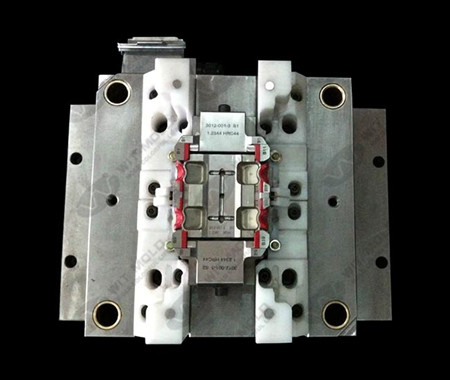
 	 INSERTED MOLDING TOOL


There are various sub-processes within injection molding that add further capabilities to this already versatile technology. This article will explore insert molding vs overmolding and the advantages of each.

Injection molding is a broad term used to describe one of the most important processes in the manufacturing industry. It’s a process that requires a mold, typically made of metal with a cavity in the shape of the desired part. Molten plastic is injected into the mold and ejected. The process repeats to produce thousands of identical parts. It’s safe to assume that every large-volume plastic part on the market has come from an injection molding machine because the benefits of using injection molding for production are numerous. These benefits include low cost per part, short cycle times, extensive materials, and compatible, in-tolerance parts.

Various sub-processes add further capabilities to this already versatile technology. This article will specifically explore insert molding vs. overmolding and the advantages of each.

What is Insert Molding?

Insert molding is a subset of injection molding techniques similar to overmolding where metal components are placed into a mold cavity before the actual plastic injection. The insert is precisely positioned inside the mold either manually or by a robotic arm. The mold then closes, and plastic is molded over the insert, creating a single part.

One of the most common applications for insert molding is the creation of metal attachment features for fasteners. Fasteners enable assemblies to be securely assembled and disassembled without product damage. Heat-set threaded inserts are molded into plastic to reduce the risks of thread damage during installation.

Insert molding can also eliminate the need for fasteners by including the necessary metal parts in the mold, thus firmly securing the parts into a single bonded component.

Why Choose Insert Molding?

Insert molding is a versatile process that has numerous benefits, some of which are listed below.

Reduced Assembly Cost – An injection molding machine can create thousands of parts per day. Such economies of scale can significantly reduce the cost of the individual parts. In a typical CNC machining, sheet metal, or additive manufactured part, any required assembly can be a major bottleneck. Insert molding can be used to eliminate assembly and thus maximize cost savings.

Part Performance – In general, plastic parts are less robust than their metal counterparts. However, plastic offers other benefits such as reduced cost, superior design flexibility, and lighter weight. Combining both metal and plastic materials into one part can capitalize on the benefits of both. Metal inserts can be used where strength and stiffness are required and the remainder of the part can be made of plastic to reduce weight. Moreover, plastic parts do not fare well against wear and tear and metal inserts add an element of durability to parts to withstand any kind of cyclical loading.

What are the Disadvantages of Insert Molding?

Despite the many benefits of insert molding, a few disadvantages need to be considered before choosing to use this sub-process.

Multiple Manufacturing Technologies – Insert molding can involve a 2-step manufacturing process. If the inserts are a custom design and not off-the-shelf parts, they will need to be manufactured using a metal forming process like CNC machining. These metal forming techniques are often significantly more expensive per part than similar, fully injection-molded processes. In some cases, the metal parts can be manufactured via die casting or MIM (metal injection molding). This can reduce the overall cost of the metal inserts but cannot eliminate the insert molded unit’s increased cost because parts with metal inserts will typically cost more than a part that is only plastic.

Increased Part Complexity – If a custom-made metal insert is required, the designer must be aware of both technologies’ design for manufacturability (DFM) principles and understand how best to integrate these technologies into a single practical part.

What is Overmolding?

Overmolding is essentially a type of insert molding. However, overmolding vs. insert molding is, as the name suggests, plastic is molded over another molded part. The first component is made inside an injection mold, and it is then placed into a second mold to add the over-molded material. This technique combines multiple plastics for either practical or aesthetic purposes. For example, one might use different durometer plastics to mold a softer plastic over a more rigid one to make a part easier to grip. Using multiple colored plastics in an over molded part can also distinguish the product from other brands. Overmolding is regularly used on the handles of tools like screwdrivers, power drills, or toothbrushes.

Why Choose Overmolding?

Overmolding is a versatile process that has numerous benefits:

Increased Material Flexibility – Overmolding allows designers to leverage the benefits of multiple types of materials to create complex parts with different properties, add visual complexity, or add haptics.

No Adhesives Required – Overmolding allows different materials to be fused in the mold, thus eliminating the need for glues or other permanent bonding methods. This increases the part’s overall durability and reduces assembly costs.

Embedded Seals – Overmolding offers the option of molding soft seals into parts. An example would be an electronics enclosure that needs to be IP rated. Usually, the part will have a groove into which an o-ring can be installed later. However, it is far more cost-efficient and robust to permanently mold the seal as an integral component.

What are the Disadvantages of Overmolding

Despite the many benefits of overmolding, a few disadvantages need to be considered before deciding to use this process.

Multi-Step Process – Overmolded parts are made in a two-step process. This increases part cycle time and is thus more expensive than molding a single part with no overmolding. This also requires two tools or a complex two-shot mold with increased upfront costs. However, when the alternative is to create two separate injection-molded parts and then assemble them after the fact, overmolding becomes a value-added solution.

Debonding – Bonding two different materials together in an injection mold runs the risk of delamination. This typically happens if the temperatures are not in the optimal range for the specific material combination. In some cases, mechanical interlocks may be required when materials cannot be reliably bonded together using heat.

Conclusion: Choosing Between Insert Molding, Overmolding, or Injection Molding

Injection molding, which includes the sub-processes of insert molding and overmolding, is a versatile and low-cost manufacturing production process that is used in the large majority of consumer products. Injection molding often results in the lowest cost per part when compared to other manufacturing techniques like CNC machining and even 3D printing.

Once injection molding is chosen for a specific application, the next step is often whether to use insert molding, overmolding, or just stick with plain injection molding. When trying to weigh the advantages of the processes, it is important to accurately define the product application. Each of these processes has specific use cases that are suited to different product types. It can be difficult to gauge which process will best suit your particular product, so it’s good to get expert advice early on. Contact WIT and We will help steer your design decisions in the right direction so that you can choose between insert molding vs. overmolding or just injection molding.

2023年10月25日星期三

What Materials Are Used for Injection Molding?

In the world of manufacturing, injection molding is a widely utilized process for creating intricate and precise plastic parts. The materials used in injection molding play a crucial role in determining the final quality, strength, and functionality of the produced components. In this article, we will delve into the various materials commonly used for injection molding and explore their unique characteristics. By understanding the different options available, you can make informed decisions when it comes to selecting the most suitable material for your specific manufacturing needs.
1. Thermoplastics

Thermoplastics are the most commonly used materials in injection molding due to their versatility and wide range of properties. These materials have the ability to soften when heated and solidify upon cooling repeatedly, allowing for easy molding and recycling processes. Some of the popular thermoplastics used in injection molding include:


Polypropylene (PP)

Polypropylene is a lightweight and flexible thermoplastic that offers excellent chemical resistance, low cost, and high impact strength. It is commonly used in the automotive, packaging, and consumer goods industries.


Acrylonitrile Butadiene Styrene (ABS)

ABS is a strong and durable thermoplastic that possesses good impact resistance and dimensional stability. It is often used in the production of electronic enclosures, automotive components, and household appliances.


Polycarbonate (PC)

Polycarbonate is a transparent and highly impact-resistant thermoplastic. It is known for its excellent optical clarity, making it suitable for applications such as safety goggles, lenses, and automotive lighting.


Polyethylene (PE)

Polyethylene is a versatile thermoplastic that comes in various forms, including high-density polyethylene (HDPE) and low-density polyethylene (LDPE). It offers excellent chemical resistance, electrical insulation properties, and is commonly used in packaging and piping systems.
2. Engineering Plastics

Engineering plastics are a class of materials that exhibit enhanced mechanical, thermal, and chemical properties compared to standard thermoplastics. These materials are specifically designed to withstand demanding environments and provide superior performance. Here are some notable examples:


Polyamide (PA)

Polyamide, commonly known as nylon, is a strong and lightweight engineering plastic. It possesses excellent tensile strength, abrasion resistance, and is often utilized in applications such as gears, bearings, and structural components.


Polycarbonate-ABS (PC-ABS)

PC-ABS is a blend of polycarbonate and ABS, combining the toughness and heat resistance of polycarbonate with the processability and cost-effectiveness of ABS. It finds extensive use in automotive, electronics, and telecommunications industries.


Polyether Ether Ketone (PEEK)

PEEK is a high-performance engineering plastic known for its exceptional mechanical, thermal, and chemical resistance properties. It is commonly employed in aerospace, medical, and oil and gas applications where extreme conditions are present.


Polyphenylene Sulfide (PPS)

PPS is a high-temperature engineering plastic that offers excellent chemical resistance and dimensional stability at elevated temperatures. It is often used in electrical and electronic components, as well as automotive parts.
3. Elastomers

Elastomers, also known as rubber-like materials, are characterized by their elasticity and flexibility. They are commonly utilized when parts require excellent sealing, cushioning, or shock-absorbing properties. Let’s explore a few examples:


Thermoplastic Elastomers (TPE)

TPEs are a versatile group of elastomers that combine the processing advantages of thermoplastics with the elasticity and softness of traditional rubber. They find extensive use in the automotive industry, medical devices, and consumer products.


Silicone

Silicone elastomers are known for their high-temperature resistance, low toxicity, and excellent electrical insulation properties. They are widely used in the medical and food industries, as well as for seals, gaskets, and electronic components.
Conclusion

In summary, the materials used for injection molding are diverse and tailored to meet specific requirements in terms of strength, flexibility, chemical resistance, and more. This article provided an overview of various materials, including thermoplastics like polypropylene, ABS, polycarbonate, and polyethylene, as well as engineering plastics such as polyamide, PC-ABS, PEEK, and PPS. Additionally, elastomers like TPEs and silicone were also discussed. By understanding the unique properties of these materials, you can make informed decisions and select the most suitable option for your injection molding needs.


Remember, choosing the right material is crucial in achieving high-quality and cost-effective production. Always consult with experts in the field to ensure the optimal selection of materials for your specific application. WIT MOLD can meet the demand for plastic products that are reasonably priced, durable, and require precise specifications every time. We are your one-stop supplier of high-quality, cost-competitive domestic molded plastic products using various plastic materials.

2023年10月9日星期一

The Ultimate Guide to Gas Assist Injection Molding


What is Gas Assist Injection Molding?

Gas assist injection molding (GAIM) is an enhanced injection molding process often applied for complex parts, large parts and parts requiring an attractive, cosmetic finish.

The types of parts benefiting most from this process include:

  • large panels
  • enclosures
  • handles
  • doors and bezels
  • tube or rod-shaped parts

How Does Gas Assist Work?

The gas assist process is introduced at the finish of the mold filling stage while the resin is still liquid.  Pressurized gas (usually nitrogen) is used in place of pack pressure from the molding machine.  The pressure from the gas completes the filling of the mold cavity, forcing an even distribution of molten resin against the mold. The gas is held inside during the entire cooling phase and then is vented, leaving a hollow void.  For internal gas-assist molding, the void is inside the plastic.  For external gas assist molding, the void is on the outside surface, typically the backside of a part.

Benefits with Gas Assist

The gas-assist process gets results when part design elements make the part difficult to manufacture using straight injection molding.  GAIM allows for more design flexibility while still being able to provide these benefits:

  • Thin-walled parts with greater strength and rigidity
  • Creation of hollowed out areas, reducing part weight
  • Reduction of molded-in stress for improved dimensional stability
  • Better surface finish with no sink marks
  • Less part shrinkage and reduced warpage

Design Advantages with Gas Assist

1. Complex Designs

For the design engineer, using GAIM expands design options and helps to minimize design changes to make the part manufacturable using injection molding. One of the greatest benefits is the ability to produce complex parts.  Oftentimes with straight injection molding, parts having different wall thicknesses are molded separately and assembled later.

GAIM allows multiple parts to be combined into one, reducing the need for secondary assembly processes – even if the parts have different wall thicknesses.  This is because gas-assist allows heavy wall sections to intersect thinner ones. Support ribs and bosses can achieve tighter tolerances and be designed larger without fear of sink marks. Gas channels are directed toward these areas and the consistent pressure during the cooling phase eliminates sink marks, associated with these support features, on the front side of the part.

2. Metal Replacement

Gas-assist allows the production of thin-walled components that have solid but hollow areas.  The resulting strength and lightweight part can often replace metal fabricated or die cast parts, and reduce product cost.

3. Large parts

The introduction of gas pressure aids in mold filling, providing uniform pressure throughout the part that lasts through the cooling stage. The result is a part with less shrinkage and reduced warpage. Part weight can also be reduced by creating hollowed out areas.

4. Cosmetic finishes

Where an attractive finished surface is required, gas-assist prevents sink areas that eliminate or at least minimize secondary operations to improve part appearance including sanding and priming.

5. Hollow parts

The gas can create hollowed out areas within parts like handles, which decreases part weight and still provides strength.


Gas Assist Molds


Cost Benefits with Gas Assist

1. Extended Tool Life

With gas-assist, lower clamping force is required because lower pressures are used.  This results in less mold wear extending the life of the tool.

2. Less Energy Cost

With lower clamping force required, larger molds can be used in smaller presses.  Smaller presses consume less power and help to decrease the cost of manufacturing the part.

3. Less Machine Time

A more rapid cooling period helps to reduce cycle time which in turn lowers manufacturing expense per part.

4. Lower Material Cost

Less material is used to produce the part because hollow areas inside of the part are created with the gas and with less resin used, the part cost is lowered.

5. Quality Results

With gas-assist injection molding, the process is typically easier to control than conventional injection molding. A dependable, repeatable process provides consistent production results and less waste.

Common pitfalls

There are many common pitfalls when it comes to Gas Assisted Injection Moulding. Firstly, it is more complex and more expensive to set up than ordinary injection molding. if the tooling price of injection mold shocks you, gas-assisted injection molds will blow you away. Also, by introducing gas into the molding mix, this variable must be precisely tracked, managed and controlled. Without experienced machine operators and technicians, the molding process could go disastrously wrong. The control of the gas also contributes to variable wall thicknesses, especially in tight corners and this is something you generally want to avoid.

Gas Assist Tool Design

If you want to achieve high-quality results, make sure you get the tool design right.

Regardless of what injection molding process will be used, it is important to engage your molder during the early stages of part design in the design for manufacturing (DFM) phase. Tooling cost, timeline, and resulting part quality will be directly impacted by the quality and efficacy of the tool.  When determining the optimal way to mold apart, engineers will consider all product requirements including application, resin selection, and cost considerations. Mold flow analysis is used to find design constraints so that adjustments can be made. When the tooling engineer determines gas-assist is the best solution, the tool will be designed with gas channels built into the mold that will allow the addition of nitrogen gas during the molding process. Determining your molding method early will conserve tooling costs and help to maintain project timelines.  Getting your molder involved early will be critical to a cost-effective, high-quality product.


To learn more about this process or to receive assistance with your project, contact WIT MOLD.

Inserted Molding Tools: Precision Solutions for High-Performance Plastic Components

  Inserted molding tools play a critical role in modern plastic manufacturing, enabling the integration of metal or other rigid inserts dir...