2022年8月22日星期一

Advantages And Disadvantages of Two-shot Injection Molding


There are a variety of manufacturing methods used to create products using plastic polymers, including two-shot injection molding, compression thermoset molding and extrusion. While all of these are viable manufacturing processes, there are several advantages to this process that make it the top choice for many plastics manufacturers. The process is relatively simple; one material is injected into a mold in order to make the initial section of the product, followed by a second injection of a secondary material that is compatible with the original material. There are three good reasons many manufacturers use this method of manufacturing plastics or polymers.

Advantages of two-shot injection molding

Two-shot injection molding is cost-effective

The two-step process needs only one machine cycle, rotating the initial mold out of the way and putting the secondary mold around the product so that the second, compatible thermoplastic can be inserted into the second mold. Because the technique uses only one cycle instead of separate machine cycles, it costs less for any production run and requires fewer employees to make the finished product while delivering more items per run. It also ensures a strong bond between the materials without the need for further assembly down the line.

Enhanced product quality

Two-shot injection molding enhances the quality of most thermoplastic items in several ways:

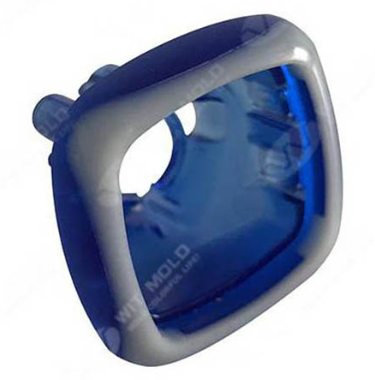
ㆍImproved esthetics. Items look better and are more appealing to the consumer when they are crafted of different colored plastics or polymers. The merchandise looks more expensive if it utilizes more than one color or texture
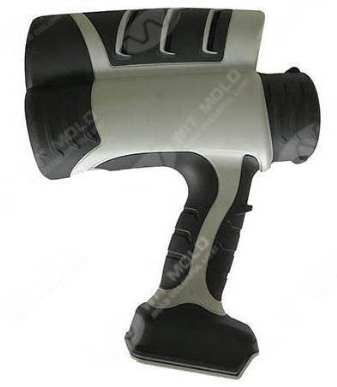
ㆍImproved ergonomics. Because the process allows for the use of soft-touch surfaces, the resulting items can have ergonomically designed handles or other parts. This is particularly important for tools, medical devices, and other hand-held items.
ㆍIt provides for a better seal when silicone plastics and other rubbery materials are used for gaskets and other parts that require a strong seal.
ㆍIt lets you combine both hard and soft polymers for outstanding comfort and utility for even the smallest of products.
ㆍIt can greatly reduce the number of misalignments when compared to over-molding or more traditional insert processes.
ㆍIt enables manufacturers to create more complex mold designs using multiple materials that can’t be effectively bonded using other processes.
ㆍThe bond created is exceptionally strong, creating a product that is more durable, more reliable, and with longer life.

Versatility

Product manufacturers favor a wide range of applications for two-shot injection molding, including automotive interior parts, medical equipment, tools, and toys. It allows manufacturers to combine various materials and colors to create a strong and attractive final product. Some materials can be effectively combined with this process, including silicone and thermoplastics, nylon and thermoplastic elastomers, or hard nylon and soft-touch materials.

Two-shot injection molding can solve your company’s product production difficulties. An experienced plastic manufacturer can guide you from concept to finished product and ensure a cost-effective solution.

Producing an assembly with multiple components

Compared to other methods of plastic molding, two-shot is ultimately a more cost-efficient way of producing an assembly with multiple components. Here’s why:

Part Consolidation: Two-shot injection molding reduces the number of components in a finished assembly, eliminating an average of $40K in development, engineering, and validation costs associated with each additional part number.

Improved Efficiency: Two-shot molding allows multiple components to be molded with a single tool, reducing the amount of labor needed to run your parts and eliminating the need to weld or join components after the molding process.

Improved Quality: Two-shot is carried out within a single tool, allowing for lower tolerances than other molding processes, a high level of accuracy and repeat-ability, and reduced scrap rates.

Complex Moldings: Two-shot injection molding allows for the creation of complex mold designs that incorporate multiple materials for functionality that cannot be achieved through other molding processes.

Disadvantages of two-shot injection molding

1) High tooling costs and long setup lead times. Up-front costs are high due to the design, testing, and tooling required. There is the initial design and prototyping (probably via CNC or 3D printing), then the design of a prototype mold tool to produce replicas of the part in volume. Lastly, and only after extensive testing during both stages, you can finally inject mold apart.

2) Part design restrictions. Plastic parts must be designed with injection molding consideration and must follow the basic rules of injection molding, for example:

Avoid undercuts and sharp edges as much as possible

Use uniform wall thicknesses to prevent inconsistencies in the cooling process resulting in defects like sink marks.

Draft angles are encouraged for better de-molding.

Don’t forget, because tools are typically made from steel or aluminum, it can be difficult to make design changes. If you need to add plastic to the part, you can make the tool cavity larger by cutting away steel or aluminum. But in order to take away plastic, you need to decrease the size of the tool cavity by adding aluminum or metal to it. This is extremely difficult and in many cases might mean scrapping the tool (or part of it) and starting over.

Also, the weight and size of the part will determine the tool size and necessary press size. The larger the part, the more difficult and expensive it will be.

3) Small runs of parts can be costly. Due to the complexity of tooling, and the necessity to rid the machine of all previous material before the next product can be made, the setup time can be quite lengthy. Therefore small runs of parts have traditionally always been thought of as too expensive to injection mold.


We are an injection mold manufacturer. If you are interested in our products, please feel free to contact us.

2022年8月7日星期日

Two-shot Molding Guide


What is Two-shot Molding

Two-shot injection molding is a multi-material injection molding process. The molded plastic part can be a combination of two different materials or a combination of different colors of the same material.

Two-shot molding can also be called 2k injection molding, double shot molding, multiple injection molding (sequential injection molding).

When Is The Use of Two-shot Molding?

ㆍProduct function requirements

For example, power switches, phone buttons, keyboard indicators, car switches, etc. Portion with an LED capable of transmitting light.

ㆍImprove the handle feeling

Some handheld products require the use of rubber in hand-held parts, which makes the hand feel more comfortable. For example, walkie-talkie housing, power tool handle, wrench, screwdriver handle, toothbrush handle, thermos, etc.

ㆍEnhance beauty

For example, some plastic parts have a logo. If you use two-shot injection molding, you don’t have to worry about it being erased.

ㆍA localized area of the product that needs to be plated

In the plastic range, only ABS and PSUsurfaces can be plated. If it is necessary to plate a part or a single side of the product, the plating area should be injected into the ABS. Areas that do not require plating are injected with other materials such as PC.

7 Suggestions for Product Design


Two-shot molding frees the designer’s creativity. However, the following factors should also be noted in the product design process.

No.1

Choose the right material. The figure below shows the compatibility of different plastics.

1 ) The core material can use low viscosity materials to reduce the injection pressure.

2) Consider from the perspective of environmental protection. The recycled material can be used as a core material.

3) Optimize the product according to the characteristics of different materials. For thick parts, the finished skin layer uses soft materials. The core material uses hard or foamed plastic to reduce weight.

No.2

If the material is not chemically compatible, the two materials can be integrated by mechanical interlocking.

No.3

Maintain proper draft angle, uniform wall thickness and smooth transition lines.

No.4

The surface of the part should be flush or slightly lower than any adjacent substrate surface.

No.5

The surface of the substrate is textured to improve the adhesion of the two materials.

No.6

The mass ratio of the two materials should not be too large. Factors such as material forming time and injection pressure should be considered.

No.7

By increasing the contact area of the two parts, the weld strength of the two materials can be enhanced.

>> Check our two shot injection molds here

9 Suggestions for Two-shot Molding


No.1

The hard plastic is molded for the first time, and the soft plastic is molded for the second time. Transparent for the first time, non-transparent for the second time. The plastic with high molding temperature is molded for the first time, and the plastic with low molding temperature is used for the second molding.

No.2

Before the official production, test the mold to produce a complete product.

No.3

Identify all possible defects in the process and eliminate them before the mold is manufactured.

No.4

Consider the shrinkage of the two materials.In general, shrinkage is determined by the material that is first formed.

No.5

A second injection can only be made after the first injection has been completely completed.

No.6

Consider the molded position, to prevent damage in the process.

No.7

Allow the edge of the first injection molded part to be too large. This ensures a higher pressure during the second injection.

No.8

Ensure that the parameters of the injection unit provide the required pressure, flow rate and cooling capacity.

No.9

Ensure that the structural strength of the first molded part can withstand the injection pressure of the second molding.

6 Suggestions for Maintenance of Two-shot Mold

No.1

Check for loose or damaged fastening parts of the double shot mold. The solution is to find parts of the same specification for replacement.

No.2

After the mold has been used for a long time, the cutting edge must be cleaned and ground. After grinding, the surface of the cutting edge must be demagnetized, otherwise it will easily block the material.

No.3

Elastic parts such as springs of the two-shot mold are most susceptible to damage during use. Breakage and deformation usually occur.

No.4

The method adopted is to replace, and the specifications and model of the spring must be paid attention to during the replacement process.

No.5

Two-shotmold punch during use prone to breakage or bending. Damage to the punch and the sleeve is generally replaced with parts of the same specification. The parameters of the punch mainly include the working part size, the mounting part size, and the length size.

No.6

Check the pressure plate, top plate and other parts of the double shot mold. During maintenance, check the accessories of each part and whether there is any damage, and repair the damaged parts. Pneumatic ejector check for air leaks, and specific measures taken.

Conclusion

Two-shot molding increases the added value and productivity of the product. At the same time, plastics are becoming more and more colorful.

Correspondingly, the cost of two-shot molding is higher. Master the design points and avoid risks in advance. Avoid cost waste.

If you have any questions about two-shot injection molds, please contact us directly. Get a free quote.

2022年7月26日星期二

Just How Tolerances Influence Injection Molded Plastics?


What Is Tolerance?

The tolerance stated in the plastic injection mold is an engineering requirement. In basic terms, they are allowable variants to the initial dimensions of the parts or the base dimension. As it is impossible to generate a product that purely abides by the base measurements, some leeway obtains factored into the design of items.

This margin ensures that all measurements for molded products fit the setting up demands. For example, you may wish to produce products with a size of 2.8 mm. Nevertheless, attempting to produce them might end up with some of them gauging 2.6 mm.

What tolerances do is to establish minimum as well as optimum values for the production process in a way that ensures the product fits. In this case, the reduced limit can be evaluated 0mm while the ceiling is readied to 0.3 mm. By doing this, you are assured products whose diameters range between 2.8 mm and also 3.1 mm.

The important of tolerances

Generating plastic parts for your products calls for that their measurements fit perfectly. It’s very easy to offer dimensions for the type of components you want; obtaining them to have similar measurements to your requirements is a virtually impossible venture to achieve.

The type of making procedure you go for also has a terrific bearing on the high quality of completion product. Injection molding is among the most effective processes you can experience with standards like hubbub 16901 to name a few, but it’s still unable to produce parts with the right fit.

The only escape of such a scenario where it’s impossible to get an exact suit is to leave area for some distinctions in dimension. They don’t need to be major; they simply require not interfere with the item style. This is where tolerances are available in.

What Influences Tolerance?

The kind of polymer utilized throughout the creation of your items substantially identifies whether the tolerances are within acceptable limitations. As distinct polymers obtain injected into the plastic mold, they cool as well as shrink at different prices.

Despite the fact that these shrinkage rates can be quickly represented, completion product will certainly have different tolerance ranges and also discrepancies from the acceptable varieties. The array is a dimension of the difference between the biggest as well as tiniest measurements of measurements in the created batch.

Various other aspects that figure out tolerance consist of the style of the product, the intricacy of the style along with the atmosphere the injection molded parts will certainly be running in.

Minimum/Good Tolerances for Plastic molds

The great, or rather, minimal tolerances are established by the plastic polymer you choose to use for your products. These tolerances also can be found in various forms. For one, there are dimensional, straightness/flatness, and also hole diameter tolerances. They are also divided right into business tolerances and precision tolerances, which are greater in price.

Considered that an injection-molded physical tightening is a result of the cooling, the facet of temperature level decrease is influenced by various other aspects as well. They include the thaw thermal reading, the cooling price, the thickness of the part, the dimensions of eviction, as well as much more.

Furthermore, a section of the molded product that is thicker than an additional will certainly experience even more shrinking. All these variables are since even though it is possible to forecast the behavior of the plastic polymer you wish to be molded; the material will never ever act as anticipated 100% of the time.

The polymer concerned might likewise experience warpage. This is particularly real with parts that are non-uniform as they shrink at various rates in comparison to components that have uniform wall surface thickness. These non-uniform components can happen whenever the part’s design has a concern.

The final words

WIT MOLD has become one of the best molds in the industry because we combine the essence of the latest technology with proven traditional methods.

With an expert team composed of experienced and knowledgeable experts, we are able to complete custom orders for Custom Plastic Molds and parts that may exceed the capabilities of our competitors. We are also unremittingly committed to improving customer satisfaction, which includes providing comprehensive end-to-end quality assurance for every product we produce.

2022年7月5日星期二

Pros And Cons Of Thermoset Injection Molding

Weighing the pros and cons of the molding process for your composites can help you determine whether it is the right choice for your project needs. Manufacturing plastic or composite parts requires heating and pouring the raw materials into a mold that has been specially made for the part. The four most common molding processes are:

ㆍCompression

ㆍInjection

ㆍTransfer

ㆍExtrusion

Different molding processes are used to create different works. In this article, we will weigh the pros and cons of the injection molding process for thermoset composites.

Advantages of thermoset injection molding

Injection-molded parts may be the most suitable one for several reasons:

ㆍMany different types of materials can be used for injection molding, including thermoplastics and thermosetting resins, polymers, and elastomers. This provides engineers with a lot of control over which hybrid material will produce the best results, especially when it is necessary to meet specific performance requirements.

ㆍVery suitable for high-volume operation.

ㆍPrecision and low waste. Due to the specific mold and material combination, compared with other processes, there is less waste of injection molded parts.

ㆍShort cooling time-the injection molded parts cool quickly, reducing the time required for the injection molded parts to be released from the mold.


thermoset injection molding

Thermoset Injection Molding

Disadvantages of thermoset injection molding

For the above reasons, injection molding is an excellent process, but it also has certain limitations and defects. These disadvantages include:

ㆍMold costs – these costs can be very important because precision-made molds are required.

ㆍFlash – Flash is inevitable when injection molding thermoset plastics. Once the part is created and ejected from the mold, the next step is to automatically or manually remove the flash (excess material). Due to the high viscosity of liquid plastics, a flash of thermoplastics is not a problem.

ㆍPart size – The size of the part being created is very important in the molding process. Typically, smaller part sizes (0.1 lb to 6 lb) are injection molded, while larger parts are transfer or compression molded. The number of orders will also determine which molding process is best for the project. Compression molding may be used for smaller parts with a low (or high) volume, while transfer molding may be used for medium to high volume projects. Injection molding will be ideal for large-volume running smaller pieces.

Finally, when choosing a molding process for your part, it is always recommended to talk to a thermoset composite or thermoplastic engineer. After assessing your needs, they will be the most capable and able to make suggestions for your work and provide the highest quality products at the most reasonable cost.

We are a thermoset injection molding supplier. Please feel free to contact us if you are interested in our thermoset injection molding or other products.

Inserted Molding Tools: Precision Solutions for High-Performance Plastic Components

  Inserted molding tools play a critical role in modern plastic manufacturing, enabling the integration of metal or other rigid inserts dir...