2021年12月4日星期六

What Are The Advantages Of Gas Assist Molds?


Gas Assist Molds


Gas assisted injection molding is a process for producing big plastic to get rid of complicated designs as well as excellent ornamental surface area coatings. Continue reading to get more information about the advantages of gas assist molds.

Smooth surfaces


Gas assist injection molding likewise produces much smoother surface areas to attain the preferred style. After the plastic product has currently been expelled from the machine, it can already be fit for market distribution with really couple of alterations or secondary procedures needed.

With a smoother surface, producers do not need to make changes to the device– i.e. lowering stress, temperature level, and even the place of the gates. This is since gas assisting can already fix many of the problems that may result on the surface of the plastic. Smoother surface areas use a more aesthetically appealing as well as smooth design.

High functionality


In the regular injection molding process, there is no gas channel to transmit a low-pressure nitrogen liquid. This suggests that the process may take a lot longer time because there is no element that is quickening the flow of the material into the mold. As a result of the absence of this part, the material can be prone to bending as well as higher inner stress.

With gas-assist, nevertheless, internal stresses are substantially minimized in the resin, leading to a much faster and freer-flowing product. Integrated with properly maintained mold and mildew dental caries, any kind of product resulting from gas-assisted injection molding will conveniently be better compared to the alternative.

Fewer products needed


Depending upon the kind of material utilized, injection molding pellets can cost as much as $5 USD per kg. This, along with the expense of purchase and maintaining the elements of the injection molding device are currently costly alone.

Knowing this, makers take advantage of gas assist when they desire a reduced volume of material to be used. This produces cost-beneficial end results for both the maker as well as the end-user.

Using less product can help them save added resin pellets for future usage without giving up the top quality. When a consumer desires a model to be done, on the other hand, they could almost request the much more cost-friendly and also economical gas assist process.

Minimizes fabrication defects


There are lots of common sorts of injection molding flaws– from something as minor as circulation lines as well as staining to something as complex as distortion and warping.

To avoid these issues from occurring, injection molding tools operators need to embark on a series of modifications on the device. For instance, they might intend to create another mold and mildew layout, increase/reduce stress and also temperature level, and even utilize various resins entirely.

Gas assist offers a reliable as well as all-around service to these flaws. As claimed before, the low-pressure nitrogen gas is constantly and also uniformly sent to the molten material. It permits the product to be firmly pressed as well as portable itself onto the walls of the mold tooth cavity. The outcome– a high-quality product that’s devoid of stress and takes the intended design and shape of the producer.
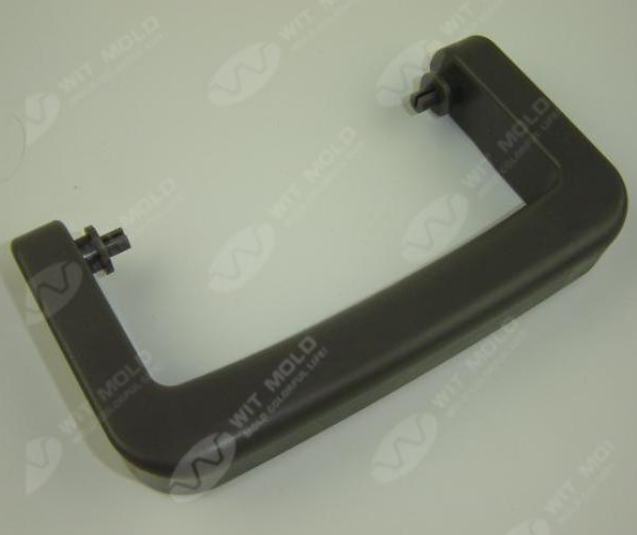
 

Gas Assist Molds


Lighter


Plastic has actually been a preferred material for several sectors as a result of its lightweight residential or commercial properties. With the right tools and also maker handy, it’s feasible to come up with acrylic, HDPE, polyethylene, and even polytetrafluoroethylene injection-molded items that are less thick than the typical material yet can still be used in functional applications.

Like the materials over, materials that have undergone gas assist injection molding are far lighter in weight in contrast with the typical injection molding procedure. The main consideration for this is that the procedure uses up much less area and material, leading to a sturdier and also extra long-lasting product that is not also cumbersome.

Critical takeaway


Several benefits of gas assist injection molding consist of the following: much better dimensional quality, enhanced efficiency, much less product, lighter product weight, smooth surface areas, and much less warping.

For both manufacturers as well as end-users, the gas assist injection molding strategy uses a number of advantages. Before deciding on whether or not the gas assist procedure is the right one for you, establish your item needs as well as factors to consider such as production as well as procurement expense, parts needed, high quality of the material, and so forth.

Improved sizing quality


The procedure of setting up multiple or particular gas channels in a single plastic injection molding equipment is absolutely nothing brand-new. As a matter of fact, gas assist is widely made use of in producing specialty items– specifically those that have special dimension styles and patterns.

Ribbed plastic items, as they’re called, are the result of a finely-tuned gas assist injection molding strategy. This process is one of the most efficient selections for generating these stylized products as a result of the boosted dimensional precision as well as quality that it provides. You’ll frequently locate everyday materials like container caps, water drums, containers, as well as much more.


We are a gas assist mold supplier, please feel free to contact us if you need them.

2021年11月21日星期日

How do you make a plastic mold?

In today’s manufacturing environment, plastics are used to manufacture a variety of items. Each application requires a special manufacturing process, which can shape parts according to their specifications. If you are making plastic parts, the first thing you need to determine is the type of molding that is best suited to your particular application.At WIT MOLD,We focus on custom plastic molding. This paper briefly summarizes five different types, their advantages and applications.

1>Blow molding – suitable for hollow objects, such as bottles

This process follows the basic steps in glass blowing. The parison (heated plastic block, usually pipe) is inflated by air. The air pushes the plastic against the mold to form the desired shape. After cooling, the plastic is ejected.

The blow molding process aims to produce large quantities of integrated hollow objects. If you need to make a lot of bottles, this is the process for you. Blow molding can produce very uniform thin-walled containers. Moreover, it can do this very economically.


2>Extrusion molding – suitable for long hollow molding applications, such as pipes, pipes and straws

Although other forms of molding use extrusion to put plastic resin into the mold, this process extrudes the molten plastic directly into the mold. The shape of the mold, not the mold, determines the shape of the final product.

Extrusion molding involves forcing molten plastic through a mold to form a shape with a fixed cross-section. This is an effective way to produce multiple shapes. Since plastics are melted from solid form and then re cured, only thermoplastics can be extruded. The extruded “pipe” can be cut or rolled up for shipment after cooling.


3>Injection molding – suitable for high quality and mass parts manufacturing

Injection molding is by far the most widely used of all injection molding technologies. The presses used in this process vary in size and are rated according to pressure or tonnage. Larger machines can inject auto parts. Smaller machines can produce very accurate plastic parts for surgery. In addition, many types of plastic resins and additives can be used in the injection molding process, which adds flexibility to designers and engineers.

The process itself is quite simple; However, there are many enhancement and customization technologies available to produce the required finishes and structures. Injection molds are usually made of steel and contain cavities for forming parts. Molten plastic is injected into the mold to fill the cavity. The mold cools and the parts are ejected through pins. This process is similar to a jelly mold, which is filled and then cooled to make the final product.

This method has high cost of mold making; However, the cost per part is very economical. Low part costs and resin and surface treatment options have contributed to the popularity of injection molding in today’s manufacturing field.


4>Compression molding – suitable for large objects, such as automobile parts

The name of this forming method says everything. The heated plastic material is put into the heated mold and then compressed into shape. Plastics can be in bulk, but usually in sheets. The heating process, called curing, ensures that the final part remains intact. As with other forming methods, once the part is formed, it is removed from the mold. If sheet plastic material is used, trim the material in the mold before taking out the part.

This molding method is very suitable for high-strength compounds, such as thermosetting resins, as well as glass fibers and reinforced plastics. The excellent strength characteristics of the materials used in compression molding make it a valuable process in the automotive industry.


5>Rotomolding – suitable for large, hollow and integrated parts

This process uses high temperature and rotary motion to coat the interior of the die and form parts. The continuous rotation of the die will produce centrifugal force, so as to form a product with uniform wall. Because it is very suitable for large hollow containers, such as cans, it is not a fast-moving process. However, this is a very economical process for specific applications and is cheaper than other types of molding. This process wastes few materials, and the excess materials can usually be reused, making it an economic and environmentally friendly manufacturing process.

Each type of molding has its advantages and disadvantages. Designers and engineers need to understand these differences and available production options, and there are always many ways to make the final solution.WIT MOLD has become one of the best molds in the industry because we combine the essence of the latest technology with proven traditional methods.


With an expert team composed of experienced and knowledgeable experts, we are able to complete custom orders for Custom Plastic Molds and parts that may exceed the capabilities of our competitors. We are also unremittingly committed to improving customer satisfaction, which includes providing comprehensive end-to-end quality assurance for every product we produce.

2021年11月12日星期五

Common Defects Of Injection Molds And Their Solutions

 injection mold


An injection mold is a tool for producing plastic products and for giving them a complete structure and precise dimensions. Read on for more information about common problems and solutions for injection molds.


A mismatch between mold and injection molding machine

Causes:

1. Positioning ring position is not correct, size is too big or too small.

2. Wrong position and size of the ejector hole of the mold; wrong position and size of the forced pull reset hole.

3. Mold width size is too big; mold height size is too small.

Solution:

1. Adjust the ejector hole position and size; adjust the reset hole position and size.

2. Replace the positioning ring; adjust the position and size of the positioning ring.

3. Change the tonnage of a large injection molding machine; increase the thickness of the mold.


Bad quality of parts

Causes:

1. The fit-gap is too large.

2. Poor glue walking, trapped air.

3. Ejector pin is too small, uneven ejection.

4. Too small bevel, burr, hardness is not enough.

5. Uneven injection pressure, insufficient strength of product form.

6. Processing error.

7. Far from the gate, low mold temperature.

Solution:

1. Trim the gate, pressure uniformity, strengthen the product strength.

2. Reasonable adjustment of clearance and grinding work part of the parting surface.

3. Improve the gate, increase the mold temperature.

4. Add local glue, add exhaust.

5. Re-processing.

6. Increase the ejector pin, evenly distributed.

7. Repair burr, increase slope, nitriding.


injection mold


The parts are difficult to fill and difficult to take

Causes:

1. The pouring system is blocked, the runner cross-section size is too small, the gate arrangement is unreasonable, and the gate size is small.

2. The limit stroke of the mold is not enough, the extraction stroke of the mold is not enough, the ejecting stroke of the mold is not enough.

Solution:

1. Check whether the limit, core extraction, and ejection strokes meet the design requirements and adjust the strokes that do not meet the requirements.

2. Check the runner and gate of each section of the pouring system, and fix the parts concerned.


Mold opening and closing ejecting reset action is not smooth

Causes:

1. Slanting ejector, ejector pin sliding is not smooth.

2. Mold frame guide column, guide sleeve sliding is not smooth, with too tight

3. Reset spring elasticity or pre-pressure is not enough.

Solution:

1. Increase or replace the spring.

2. Repair or replace the guide pillar, guide bush.

3. Check and repair the slanting top, ejector pin.


Mold water transportation is not working or water leakage

Causes:

1. Water sealing rubber ring and water pipe joint are not sealed enough.

2. The mold water channel is blocked and the inlet and outlet water pipe joints are connected in the wrong way.

Solution:

1. Check the cooling system inlet and outlet water pipe joints connection and each section of the waterway, repair the relevant parts.

2. Check the water sealing rubber ring and water pipe joints, repair or replace the parts.


WIT MOLD is a very professional mold design and mold manufacturer located in southern China and has passed the ISO2009:2015 international quality Our injection molding process can be customized according to your unique project. If you are interested, please feel free to contact us.

2021年11月3日星期三

What Are The Requirements For Injection Molding Machines For Precision Injection Molding?


HIGH PRECISION MOLDS


Precision injection molding machine refers to the molding machinery and equipment that is suitable for molding and producing precision plastic products. For a precision injection molding machine, how should we measure or judge it?

Many precision injection molding also requires injection molding machines with

① High injection pressure and high injection speed.
②Mold clamping system with sufficient rigidity and clamping accuracy. The so-called clamping accuracy refers to the uniformity, adjustability, stability and repeatability of the clamping force, and high accuracy of the opening and closing position of the mold.
③The pressure, flow, temperature and metering can be controlled precisely to the corresponding accuracy, and multi-stage injection can be used to ensure the reproduction of the molding process and the repetition accuracy of the products, etc.

The benefits of high-pressure molding that can be realized by precision injection molding machine

A. Improve the precision and quality of precision products.
The injection pressure has the most obvious effect on the shrinkage rate of the product molding. When the injection pressure reaches 392 MPa, the shrinkage rate of the product molding is almost zero. And the precision of the products at this time is only affected by the mold control or environment. Experimental evidence: injection pressure from 98 to 392 MPa, the mechanical strength of the parts can be increased by 3 to 33%.


HIGH PRECISION MOLDS

B. The wall thickness of precision products can be reduced and the molding length can be improved.
Take PC as an example, ordinary machine injection pressure of 177 Mpa can mold 0.8mm wall thickness products, while precision machine injection pressure of 392 MPa can mold products with thickness of 0.45mm or more. Ultra-high pressure injection machine can obtain products with greater flow length ratio.
C. Increase the injection pressure can fully develop the efficacy of injection rate.

The performance of injection molding machine to achieve precision injection molding

Injection molded products have been applied to various fields and widely used to replace metal parts with high precision, thus putting forward strict requirements on the dimensional accuracy, quality accuracy, apparent quality and mechanical properties of injection molded parts. At the same time, the process factors affecting the quality of injection molded products have also put forward higher requirements.
The ideal state of injection molding machine control is to directly control the product size, quality, apparent quality, mechanical properties of the variables as feedback signals for feedback control. However, for the time being, direct measurement and conversion of these non-electrical quantities into electrical signals has not been solved, so it can only be solved by controlling the controllable variables of the injection molding machine that affect the quality of the above mentioned products.


We are a precision injection molding company, please feel free to contact us if you need.

Inserted Molding Tools: Precision Solutions for High-Performance Plastic Components

  Inserted molding tools play a critical role in modern plastic manufacturing, enabling the integration of metal or other rigid inserts dir...