2021年10月12日星期二

Plastic and silicone casting molds: what's the difference?

Plastic resin mold and silica gel mold are the two main molds we use to cast handicrafts or jewelry. Both resins are suitable for different types and quality of molds.Understanding the difference between plastic molds and silicone molds is important to get the results you want. Both types of molds can use a variety of resins, but understanding the limitations of each mold is very important to ensure the correct production of your products.

Here, we will outline plastic and silicone molds and their advantages and disadvantages.


Plastic resin mould

These reusable resin casting molds are usually made of polypropylene or polyethylene plastic sheets. They are usually made of templates and are partially flexible.

Benefits:

high quality and inexpensive. Plastic resin molds usually cost less than $10. (many are less than $5!) if or when you damage the mold, you usually don't spend a lot of money to replace it.

Easier to use. Plastic molds are a good place for new craftsmen to start. Compared with silicone molds for epoxy resin, they are easier to demould and maintain.

Disadvantages:

Castings cannot be shiny and shiny. Once removed from the mold, the casting surface contacting the mold surface may not be as shiny as you want. You either need to coat a layer of resin or cover a layer of resin gloss sealant spray.

It's easy to scratch. Although the softness of plastics is helpful, it makes it easier to scratch the surface. If you are not careful, things like toothpicks or nails will leave obvious dents.

It's hard to make it yourself. Making your own plastic resin casting mold requires vacuum forming plastic sheets around the template, which requires special equipment.


Understanding the difference between plastic molds and silicone molds is important to get the results you want. Both types of molds can use a variety of resins, but understanding the limitations of each mold is very important to ensure the correct production of your products.

Here, we will outline plastic and silicone molds and their advantages and disadvantages.

Plastic resin mould

These reusable resin casting molds are usually made of polypropylene or polyethylene plastic sheets. They are usually made of templates and are partially flexible.

Benefits:

high quality and inexpensive. Plastic resin molds usually cost less than $10. (many are less than $5!) if or when you damage the mold, you usually don't spend a lot of money to replace it.

Easier to use. Plastic molds are a good place for new craftsmen to start. Compared with silicone molds for epoxy resin, they are easier to demould and maintain.

Disadvantages:

Castings cannot be shiny and shiny. Once removed from the mold, the casting surface contacting the mold surface may not be as shiny as you want. You either need to coat a layer of resin or cover a layer of resin gloss sealant spray.

It's easy to scratch. Although the softness of plastics is helpful, it makes it easier to scratch the surface. If you are not careful, things like toothpicks or nails will leave obvious dents.

It's hard to make it yourself. Making your own plastic resin casting mold requires vacuum forming plastic sheets around the template, which requires special equipment.


Custom injection plastic molds can be made of a variety of materials, such as aluminum, steel, or alloys, and may contain various internal components such as pins, rails, bushings, and ejectors.


Silicone mold

These reusable molds are made of two parts of silica gel and can be used for many years if properly maintained.

Benefits:

Very flexible. Silicone molds allow you to make complex castings that can be removed more easily than plastic molds.

Custom mold. You can buy two-piece silicone and shape anything you want (assuming you have a model).

Castings may glow. I say "possible" here because the original model used to make the mold must be shiny. If so (like our geometric silicone mold), your casting should be as shiny as the original.

Disadvantages:

expensive. The price of silicone mold for epoxy resin and general process is two to three times that of plastic mold.

Need more care. Silica gel mold must be cleaned after use and placed in a cool and dry place.

Pressure casting may be required. Unless you use a transparent silica gel mold to make epoxy resin, you may not see all bubbles in the resin when pouring it into silica gel. You may need to use a pressure casting device to ensure that all bubbles are treated before the resin begins to cure.

So what kind of resin mold should I choose?

Any kind of resin casting mold can bring you excellent results. Choose your favorite style and shape and start creating!These reusable molds are made of two parts of silica gel and can be used for many years if properly maintained.

Benefits:

Very flexible. Silicone molds allow you to make complex castings that can be removed more easily than plastic molds.

Custom mold. You can buy two-piece silicone and shape anything you want (assuming you have a model).

Castings may glow. I say "possible" here because the original model used to make the mold must be shiny. If so (like our geometric silicone mold), your casting should be as shiny as the original.

Disadvantages:

expensive. The price of silicone mold for epoxy resin and general process is two to three times that of plastic mold.

Need more care. Silica gel mold must be cleaned after use and placed in a cool and dry place.

Pressure casting may be required. Unless you use a transparent silica gel mold to make epoxy resin, you may not see all bubbles in the resin when pouring it into silica gel. You may need to use a pressure casting device to ensure that all bubbles are treated before the resin begins to cure.

So what kind of resin mold should I choose?

Any kind of resin casting mold can bring you excellent results. Choose your favorite style and shape and start creating! WIT MOLD has lots of molds to get you started, all chosen by avid resin addicts who trust them for all their crafting.

 

2021年9月10日星期五

Pros And Cons Of Thermoset Injection Molding

Weighing the pros and cons of the molding process for your composites can help you determine whether it is the right choice for your project needs. Manufacturing plastic or composite parts requires heating and pouring the raw materials into a mold that has been specially made for the part. The four most common molding processes are:

Compression

Injection

Transfer

Extrusion

Different molding processes are used to create different works. In this article, we will weigh the pros and cons of the injection molding process for thermoset composites.

Advantages of thermoset injection molding

Injection-molded parts may be the most suitable one for several reasons:

Many different types of materials can be used for injection molding, including thermoplastics and thermosetting resins, polymers, and elastomers. This provides engineers with a lot of control over which hybrid material will produce the best results, especially when it is necessary to meet specific performance requirements.

Very suitable for high-volume operation.

Precision and low waste. Due to the specific mold and material combination, compared with other processes, there is less waste of injection molded parts.

Short cooling time-the injection molded parts cool quickly, reducing the time required for the injection molded parts to be released from the mold.

thermoset injection molding

thermoset injection molding

Disadvantages of thermoset injection molding

For the above reasons, injection molding is an excellent process, but it also has certain limitations and defects. These disadvantages include:

Mold costs-these costs can be very important because precision-made molds are required.

Flash-Flash is inevitable when injection molding thermoset plastics. Once the part is created and ejected from the mold, the next step is to automatically or manually remove the flash (excess material). Due to the high viscosity of liquid plastics, a flash of thermoplastics is not a problem.

Part size-The size of the part being created is very important in the molding process. Typically, smaller part sizes (0.1 lb to 6 lb) are injection molded, while larger parts are transfer or compression molded. The number of orders will also determine which molding process is best for the project. Compression molding may be used for smaller parts with a low (or high) volume, while transfer molding may be used for medium to high volume projects. Injection molding will be ideal for large-volume running smaller pieces.

Finally, when choosing a molding process for your part, it is always recommended to talk to a thermoset composite or thermoplastic engineer. After assessing your needs, they will be the most capable and able to make suggestions for your work and provide the highest quality products at the most reasonable cost.

We are a thermoset injection molding supplier. Please feel free to contact us if you are interested in our thermoset injection molding or other products.

2021年9月1日星期三

Two-Shot Molding vs. Overmolding

What is two-shot molding?

Two-shot molding, also known as dual-shot, multi-shot, or double-shot molding is a subcategory of injection molding that allows engineers to create multi-material or multi-colored parts without adding additional assembly steps.
The two-shot injection molding process is best understood, where different material layers or colors are created by the injection molding machine. The first material is injected into the mold to create the substrate, and other materials or materials around the substrate will be molded. The substrate solidifies and cools before being transferred to another cavity of the mold by hand, a robotic arm, or a rotating plane.
Engineers should know that the speed of two-shot injection molding can be accelerated or slowed down depending on how the substrate is transferred to other cavities of the mold. Hand and robot arm transfer takes longer than rotating planes, but rotating platen molding is more expensive, and is usually just an efficient option for high-volume operation.
In addition, it is essential that the materials of the mold will be easily combined and the molds are properly aligned to prevent deformed parts.
Advantages and disadvantages of two-shot molding
Two-shot plastic injection molding is efficient and economical manufacturing technology. This process can also produce highly durable end parts and assemblies.
From a design point of view, two-shot molding provides designers with a lot of flexibility, because this process can create complex geometric shapes and accommodate multiple colors to make parts more beautiful.
In addition, since one machine manufactures the entire part, no post-processing is required, engineers can drastically reduce manufacturing time, thereby keeping costs low. However, it is worth noting that the cost of the initial two-shot mold may be very high, and the two-shot molding machine is more expensive than the standard injection molding machine. Fortunately, these costs are usually offset by saved labor and assembly costs for mass production.

Two-shot moldingWhat is overmolding?
Overmolding, like two injection molding, is a multiple injection molding process that uses two or more different thermoplastics to produce a single final product. This process is ideal for engineers who want to build components that are strong, functional, beautiful, and that will not separate over time.
In order to start the over-molding process, engineers injected a harder over-molding material. Then, the substrate is placed in a complex mold or a complex cavity in the same mold. The molten overmolding material is sprayed into the substrate, or onto the substrate, or sprayed around the substrate. After the molten material is cooled, the substrate and the mold are bonded chemically or mechanically. The entire over-molding process only takes 30 seconds.
Advantages and disadvantages of overmolding
Overmolding and two-shot injection molding have many of the same advantages. They are ideal for the rapid manufacture of durable, reliable, and shock-resistant parts with complex geometries, but over-molding is best suited for low-volume production runs.
Compared with two-shot molding, the design of multiple molds is also easier to carry out, because engineers can use any standard injection molding machine to carry out this process.
In terms of disadvantages, the tolerances of parts manufactured by overmolding are often lower than those of two-shot molding that can be achieved. It is also important to remember that plastic compatibility requirements may limit designers.
We are two-shot molding suppliers. Please feel free to contact us if you are interested in our products.

2021年8月23日星期一

Successful T1 Mold Trial

We are so glad to share this good news! We did good job again! T1 Mold trial is very successful today! Thanks for all our WIT MOLD Team’s hard working and good skills! We are also truth grateful to the customers who choose us as your supplier in China.


2021年8月15日星期日

WIT MOLD New CNC Machine Has Started Working

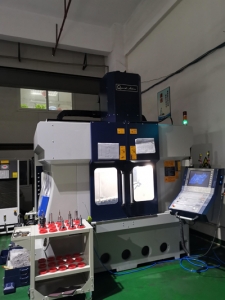
This new machine is focusing on building your optic surface. If you worry about whether it is okay to make the radius 0.1mm for your optics surface or your light guide,  WIT MOLD can help you to complete this job successfully.

New CNC machine

New CNC machine

2021年8月6日星期五

Thermoset Vs Thermoplastic Injection Molding

The properties of thermosets and thermoplastics are very different, but their similarities and differences are often asked. The main difference between these two plastics is heat resistance and chemical resistance. Heat resistance is the main function of thermoset materials, while thermoplastics-more common-can only withstand a certain degree of heat. It is worth noting that plastic injection molding companies usually do thermoset or thermoplastic injection molding, but they rarely deal with both.

Below, we have broken down the differences between thermoset and thermoplastics in terms of the injection molding process, material availability, use, cost, and recyclability. Take a look:

Thermoset and thermoplastic injection molding: a comparison

Injection molding process

In thermoset injection molding, cold material is injected into an extremely hot mold to create a part. This process can solidify the part so that it can no longer melt.

In thermoplastic injection molding, the plastic material is melted and injected into a mold to make a part. Once this part has cooled, the mold opens and partly falls off.

Availability

The earliest plastic materials were thermoset, but today, thermoset injection molding is not common, except for electrical contact applications and liquid silicon. Therefore, thermoset Injection Molds machines are usually more difficult to find than thermoplastic injection molding machines.

THERMOSET INJECTION MOLDS

THERMOSET INJECTION MOLDS

Uses

Thermoset parts are usually used where the parts must be able to withstand high temperatures. The medical part is a good example; dental tools with silicone handles and metal parts must be able to withstand the autoclave process for disinfection and reuse, so the silicone must be thermoset. Thermosets are also used for high voltage electrical applications.

Thermoplastic parts are more likely to be used in consumer plastics, which either do not come into contact with high temperatures, such as those used in milk cans or need to withstand moderate heat. For example, some polycarbonates are resistant to high temperatures and are often used to make plastic take-out cups, but they can still deform or melt at sufficiently high temperatures.

When considering thermoset and thermoplastic parts, you also need to consider whether the parts are regularly exposed to certain chemicals. For example, if you are making a plastic case for an electrocardiograph, the material used must be resistant to any hospital-grade chemical disinfectant.

Cost

The cost difference between thermoset and thermoplastic injection molding is not black and white. The thermosetting process is usually slower—corresponding to higher cost—the material difference of thermoplastics can range from 90 cents per pound to $10 per pound, depending on performance. In other words, cost considerations should not be enough to make engineers move to one type or another—decisions should be based more on the material properties and the functions of the required components.

Recycling capacity

Thermoplastics are manufactured by melting pellets and then cooling them. This ensures that the finished part can also be remelted. This makes thermoplastics recyclable. Of course, when you melt apart, certain characteristics are different, so recycling thermoplastics does not guarantee that you get the same quality plastic parts-but it is worth noting.

On the other hand, thermosets cannot be remelted-so although thermoplastic parts can be ground and used in sandbags, their recyclability is limited.

We are Thermoset Injection Molds suppliers. Please feel free to contact us if you are interested in our products.

2021年7月29日星期四

What Does Mold Saving In The Mold Mean?

Mold saving refers to the fitting that does not reach the design accuracy when assembling the mold, and abnormalities will occur when the product is produced, and the required accuracy is not reached, and the mold saving process is required for fine adjustment.

The method of mold saving generally needs to be carried out in accordance with the standard operating steps. The operator of the mold optical polishing plant needs to strictly follow the following mold-saving operation methods to do the most basic mold-saving polishing for the mold.

  1. When a new mold starts to be processed, it should be cleaned with firewater (kerosene) first, and then all oil stains and unnecessary objects should be wiped off with alcohol so that when the mold is filled with an oilstone, the oilstone surface will not stick to dirt and the cutting function is lost.
  2. When saving molds, the bottom corners, bone pits, and dead corners of the mold should be saved first, and the protrusions and large planes should be saved later.
  3. Some of the modules are embedded in three to four pieces to form a module. Only rough or fire patterns are punched along the edges of the individual die openings, and then all the modules are clamped to be smooth, and the plastic parts are clamped when they are out. The position will be slightly smoother.
  4. For modules with large planes or high protrusions, be sure to use flat steel sheets and the red lead to check whether the modules are uneven or reversed after the rough grains are removed. If there is any unevenness in the finished product, it will stick mold or drag flowers.
  5. If the module is a flat surface and maybe a sealing position in a certain place, we can use double-sided adhesive tape to paste sandpaper on the edges that do not want to save the mold, so as to ensure that there is no place that should not be saved.
  6. Use copper or bamboo to press the sandpaper to save the mold. Keep in mind that the sandpaper should not be larger than the area of the tool or even the place that should not be hit by the extra sandpaper to round the mouth or change the status of unevenness.
  7. For processing with copper or bamboo, the shape of the tool should be similar to that of the mold, so as not to save the mold. For example, flat bamboo should be used for the plane, and small or round bamboo should be used for processing the small or round surface.
  8. When the mold-saving plane is next to the protruding position, sandpaper or oil stone should be struck at 15 to 30 degrees syncline to avoid a deep hole next to the protruding position.
  9. For example, when the crude oil stone is 150#, 180#, 220#, and other oil stones, fire water should not be added, except for light 320# and above. Manual use of copper or bamboo pieces depends on the environment at the time.
  10. If the module is not allowed to have fire patterns, the saver must see them clearly or use different methods to find the fire patterns and remove them. Because there are patterns after each trial of the mold. The module must be assembled and disassembled and tried again mold, it will cost a lot of man-hours and waste materials.
  11. Check the fire pattern method of the module. After the module is cleaned, the surface of the copper acid can be evenly coated with a brush. After about 3 to 5 minutes, the module is washed with water and dried with an air gun. After the test, the molds with no fire patterns on the surface will be darkened, and those with fire patterns on the surface will show shiny spots. Repeat the treatment with oilstone or sandpaper until there is no fire pattern, and it will be completely darkened after the copper acid test.
  12. You don’t need to be more serious about the blister copper male than the young copper male. As long as you omit the protruding parts of the copper male surface or the convex position, you don’t have to save the concave part. We need to find the problem to save the mold.
  13. If the copper male is placed on the bronze fixture of the spark machine, the four benchmark nails below must be placed on the bottom with a soft object (such as cloth, paper) to avoid unnecessary damage when the workpiece is moved, and put it on the table or on the shelf.
  14. Use hand or machine to hit above 400# sandpaper. Pay attention to the clean environment around the module. The sandpaper should be rubbed on the sandpaper rolls before cutting, and the slightly coarse sand particles on the sandpaper should be removed. This will reduce the sudden roughness when polishing.
  15. If the model saver finds an abnormality, he should report it to the supervisor. The manager should be notified when the model is completed, and should not be handed over without completion.

Inserted Molding Tools: Precision Solutions for High-Performance Plastic Components

  Inserted molding tools play a critical role in modern plastic manufacturing, enabling the integration of metal or other rigid inserts dir...